Thinning Hair After 30: Causes and Gentle Fixes
Why hair thins in your 30s and 40s, how to tell normal shedding from hair loss, and the gentle steps and treatments that help.
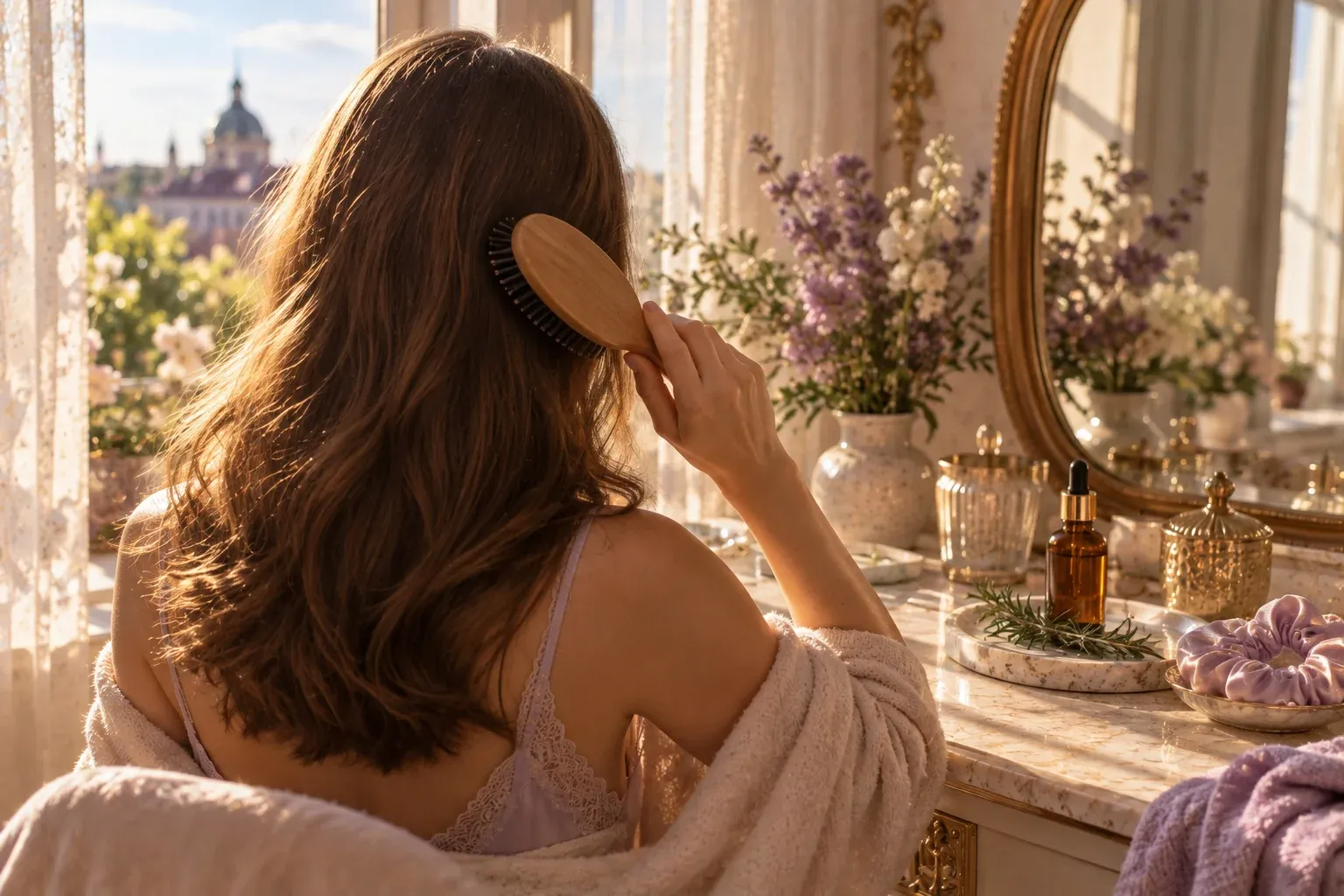
Finding more hair than usual in your brush or shower drain can be genuinely upsetting. Thinning hair in women is far more common than most people realize, and in many cases it is temporary or treatable. The key is understanding what is behind it.
This guide explains how much shedding is normal, the most common causes of hair loss after 30, and gentle fixes that support healthier, fuller hair.
How much hair loss is normal?
Losing around 50 to 100 hairs a day is completely normal. Hair grows in cycles, and every day some hairs reach the end of their life and fall out to make room for new ones. You may notice more on wash days or after brushing long hair.
It is worth paying attention if you see:
- noticeably more hair on your pillow, in the shower or on your brush for several weeks
- a wider parting or more visible scalp
- a thinner ponytail
- patches of hair loss
Common causes of thinning hair in women
1. Stress and illness (telogen effluvium)
This is one of the most common causes of sudden shedding. A big physical or emotional stress, such as an illness with high fever, surgery, rapid weight loss, giving birth or a very stressful life event, pushes many hairs into the resting phase at once. The shedding usually starts two to three months later, which is why it can feel like it came from nowhere.
The good news: telogen effluvium is temporary. Once the stress has passed, hair usually regains its fullness within six to nine months.
2. Iron deficiency and other nutrients
Low iron is common in women with heavy periods and is closely linked with hair shedding. Low vitamin D, B12, zinc and not eating enough protein or calories can also play a role.
3. Thyroid problems
Both an underactive and overactive thyroid can cause diffuse thinning, often alongside tiredness, weight changes or feeling unusually cold or hot.
4. Hormonal changes
Hair often thins after pregnancy, after stopping the pill, with PCOS, and during perimenopause and menopause, when falling oestrogen affects the hair growth cycle. You can read more about this stage in our guide to early perimenopause symptoms.
5. Female pattern hair loss
Also called androgenetic alopecia, this is a gradual, genetic thinning that usually shows as a widening parting and less volume on top, while the front hairline stays in place. It often runs in families and becomes more noticeable after menopause.
6. Hair care and styling
Very tight ponytails, braids and extensions can pull on hair follicles over time (traction alopecia). Frequent bleaching and heat styling make hair break, which can look like thinning.
Gentle fixes that support healthier hair
Get the basics checked
A simple blood test can check iron (including ferritin), thyroid function, vitamin D and B12. If something is low, treating it often makes a real difference.
Eat enough protein and iron
Hair is made of protein. Include a source at every meal: eggs, fish, chicken, Greek yoghurt, tofu, beans and lentils. Pair plant iron with vitamin C, such as lentils with peppers or spinach with lemon.
Be gentle with your hair
- Choose looser hairstyles and soft scrunchies.
- Use heat protectant and lower heat settings.
- Detangle from the ends up with a wide-tooth comb.
- Sleep on a silk or satin pillowcase to reduce friction.
Care for your scalp
A clean, healthy scalp is a good environment for growth. Wash as often as your scalp needs, and treat dandruff or itching, which can make shedding worse.
Manage stress where you can
Easier said than done, but sleep, movement and rest genuinely help. Our evening routine for better sleep is a good starting point.
Treatments to discuss with a professional
- Topical minoxidil. Approved for women with pattern hair loss and available without a prescription in many countries. It takes three to six months to show results, and some temporary shedding at the start is normal.
- Prescription options. For hormonal hair loss, a doctor or dermatologist may suggest other treatments such as spironolactone or low-dose oral minoxidil.
- In-clinic treatments. Some women choose platelet-rich plasma (PRP) or low-level laser therapy. Evidence is growing but mixed, so ask about results and costs.
Best hairstyles and products for thinning hair
While you address the cause, a few styling tricks can make hair look fuller:
- A shorter or layered cut often looks thicker than very long, one-length hair.
- Change your parting to the other side or try a slightly zigzag parting.
- Use lightweight volumising products and avoid heavy conditioners at the roots.
- Blow-dry upside down or with a round brush to lift the roots.
- Try soft color. Highlights or a shade closer to your scalp color can make thinning less visible.
- Scalp concealer powders or sprays can cover a wider parting for special occasions.
How long until hair grows back?
Hair grows roughly one centimeter a month, and new growth takes time to become visible. After the cause is treated, most women notice less shedding within two to three months and visible regrowth after three to six months. Patience is part of the treatment.
When to see a doctor
See a doctor or dermatologist if hair loss is sudden, patchy or comes with itching, pain or redness; if you notice other symptoms like extreme tiredness or irregular periods; or if shedding lasts longer than six months. The earlier the cause is found, the better treatments work.
Frequently asked questions
Can stress really make your hair fall out?
Yes. Major stress can trigger telogen effluvium, which causes noticeable shedding two to three months later. It is usually temporary.
Do hair growth supplements work?
They mainly help if you are actually low in a nutrient. Taking extra biotin or iron without a deficiency won’t speed up growth, and too much iron can be harmful. Test first.
Will my hair grow back?
In many cases, yes. Shedding from stress, illness, pregnancy or low iron usually recovers once the cause is treated. Pattern hair loss can be slowed and often partly reversed with treatment.
The takeaway
Thinning hair is common, and you are not imagining it. Start with the basics: check your iron, thyroid and vitamins, eat enough protein, be gentle with styling and give your hair time. If it doesn’t improve, a dermatologist can help you find the right treatment.
This article is for general information and is not medical advice.
You might also love
 Winter
Winter Skincare Routine: How to Keep Dry Skin Soft All Season
Cold air outside, dry heat inside: here's a gentle morning and evening routine to keep your skin soft, calm and comfortable until spring.
Read the story
Skin Cycling for Beginners: A 4-Night Routine That Actually Works
How a simple four-night rotation of exfoliation, retinoid and recovery can give you smoother skin without irritation.
Read the story